Stories · Symposium · Music
Why do people sing while drinking?
Singing while drinking is not reason’s defeat. In Athens wine unlocked speech and music; after empire fell, a Burgundy monk kept vines and chant alive. That promise reaches today’s glass.
Singing while drunk is not reason’s defeat
Singing after wine is often read as reason losing. About 2,500 years ago in Athens it meant something else. Putting wine, song, and talk at the same table was a way to think more deeply.
People worried either way. Drink too much and you grow foolish. Drink nothing and you lose one of life’s great pleasures. From that tension came a culture where wine and music share one seat.
Gateway to folly, or a key to speech and song?
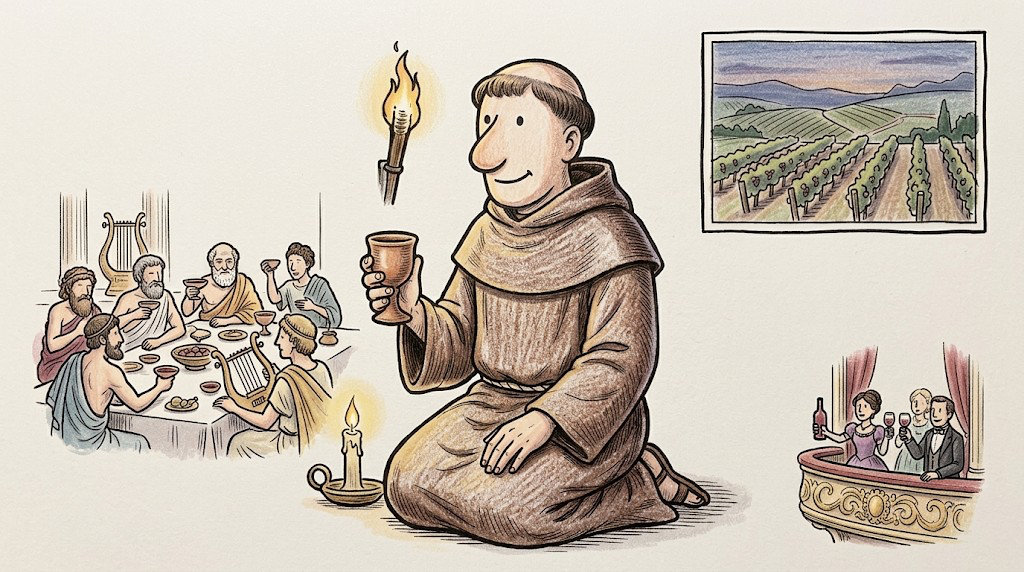
One answer was the symposium. Philosophers reclined, drank wine, listened to the lyre, and talked. Plato’s Symposium paints that very room.
There they saw that wine need not only break reason. It could unlock speech and music. Drinking, talking, and singing became one culture.
After Rome fell, that happiness did not last. War left vineyards untended; music and wine slipped from daily life for people simply trying to survive. The enemy was not excess alone. It was culture going dark.
Knees in the rows, chant at night
Someone kept the lamp lit: a monk in medieval Burgundy.
At dawn he kneels on a rough slope. The soil is cold; the vines are thin. By day he tends the rows; by night he sings Gregorian chant in a stone chapel. No grand invention, only vine work and prayer, day after day. Wine and chant were polished slowly.
That line later reaches Italian opera. After the story on stage, a toast with wine. The form changed, but the wish for wine and art at the same table remained.
A long promise left in tonight’s glass
So when you hum over a glass tonight, it is not only tipsy impulse. It is the continuation of a long promise: wine called to the table not to discard reason, but to loosen speech and song.